You did everything right. You landed a guest post on a decent site, got a nice contextual backlink from a niche blog, or finally secured that PBN link you’ve been building for weeks. You check Google Search Console a few days later expecting to see the referring domain show up and nothing. The link is live. Google just doesn’t seem to know it exists.
If this sounds familiar, you’re not alone. It’s one of the most common frustrations SEOs run into, and it’s rarely talked about with enough detail. In this post, we’ll break down exactly why backlinks don’t get indexed, how to check if your links are actually indexed, and what you can do to fix it including tools that automate the whole process.
What Does It Mean for a Backlink to Be “Indexed”?
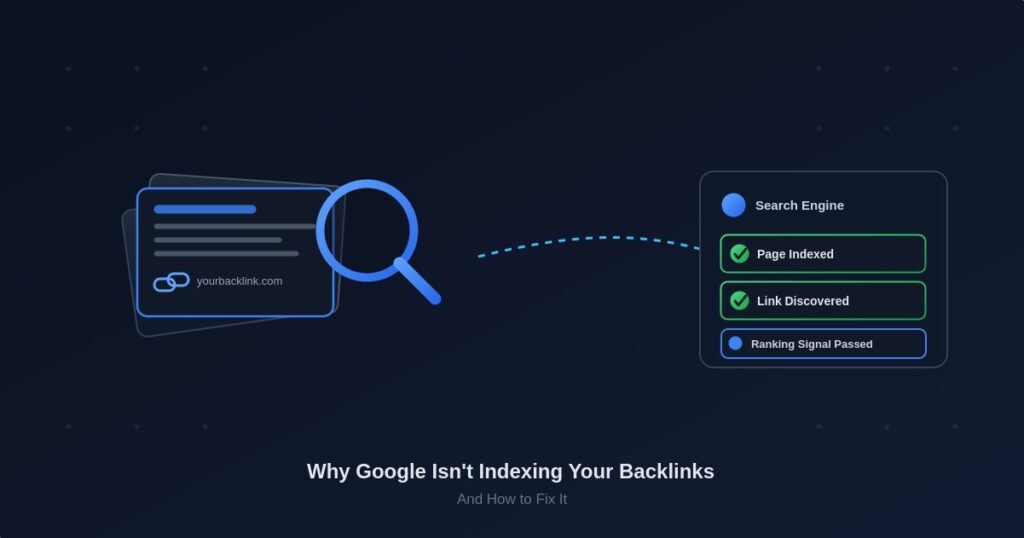
A backlink only passes SEO value once Google has crawled the page it lives on and added that page to its index. Until that happens, the link is essentially invisible to Google it doesn’t matter how relevant, authoritative, or well-placed it is. An unindexed backlink is a backlink that isn’t helping your rankings at all. If you want a quick primer on how indexing works before diving in, check out how link indexing works.
This is different from the link simply “existing.” A link can be live on a page for months and still never get crawled if that page itself is buried, ignored, or considered low priority by Google’s crawlers.
Why Your Backlinks Aren’t Getting Indexed
There isn’t one single reason usually it’s a combination of a few of these:
1. The linking page has low authority or is new
Google allocates what’s known as a crawl budget to every site, and it prioritizes crawling based on a domain’s authority and history. A brand-new blog or a low-authority site simply doesn’t get crawled often, so any backlink placed on it can sit unindexed for weeks.
2. Thin or duplicate content
If the page hosting your backlink is thin, spun, or duplicated from elsewhere, Google’s crawlers deprioritize it. Search engines are increasingly aggressive about skipping content that doesn’t look original or valuable.
3. No internal links pointing to that page
If the page containing your backlink isn’t linked to from anywhere else on that site, it becomes an “orphan page.” Orphan pages are far less likely to be discovered and crawled quickly.
4. The site has crawl or technical issues
Blocked resources in robots.txt, broken sitemap files, slow server response times, or excessive redirect chains can all quietly stop a page from being crawled, even if nothing looks wrong on the surface.
5. Google is deliberately deprioritizing spammy link networks
If your backlink comes from a PBN, an expired-domain network, or a site with a history of spammy behavior, Google may crawl it far less frequently or in some cases, ignore it almost entirely.
6. You’re relying only on passive discovery
By default, Google finds new pages by crawling links from pages it already knows about, or through your sitemap. If nobody actively tells Google “hey, this new page exists,” it can take days or weeks for it to show up naturally, especially for smaller or newer sites.
This is exactly the gap that active indexing signals like the ones covered in our indexing features overview — are designed to close.
How to Check If Your Backlinks Are Actually Indexed
Before fixing anything, confirm the problem is real. A few free ways to check:
- Site search operator: Search site:domain.com/exact-page-url in Google. If nothing shows up, it’s not indexed.
- Google Search Console URL Inspection tool: Paste the exact URL and check the “URL is on Google” status. This only works for properties you own, so it’s mainly useful for your own pages, not third-party linking pages.
- Bulk index checker tools: For checking dozens or hundreds of backlinks at once (which is what most SEOs actually need), a bulk indexing checker saves hours compared to manually searching one URL at a time. LinksIndexerHub dashboard shows indexing status for every submitted link in one place.
How to Fix Backlink Indexing Issues
Once you’ve confirmed a batch of backlinks isn’t indexed, here’s what actually works:
Submit through Google Search Console manually
You can manually request indexing for a handful of URLs through GSC’s URL Inspection tool. This works, but it’s slow and has strict daily limits, making it impractical if you’re dealing with dozens or hundreds of links across different campaigns.
Use IndexNow
IndexNow is a protocol supported by Bing, Yandex, and Seznam that instantly notifies search engines when a new URL should be crawled. It doesn’t cover Google directly, but faster indexing on other engines combined with proper signals often speeds up the overall discovery process for a domain. See our IndexNow integration guide for setup details.
Ping sitemaps and RSS feeds
Actively pinging XML sitemaps and RSS feeds after a new backlink goes live sends an additional discovery signal, especially useful for link building on smaller or newer blogs that don’t get crawled often on their own.
Build internal links to the linking page
If you have any control or relationship with the site (common with guest posts or PBNs), make sure the page hosting your backlink is internally linked from higher-authority pages on that same domain.
Use a dedicated link indexing service
For SEOs and agencies managing large volumes of backlinks whether from guest posts, PBNs, or outreach campaigns checking and indexing each link manually simply doesn’t scale. This is exactly the gap tools like LinksIndexerHub are built for: submit your backlink URLs in bulk, and the platform combines IndexNow pings, sitemap and RSS signals, and crawl triggers to push search engines toward discovering and indexing them faster, without you having to manage each one individually. Agencies managing multiple clients can also check out our white-label plans for reselling under their own brand.
Final Thoughts
An unindexed backlink is a wasted backlink. If you’re spending time and money on link building whether that’s guest posting, PBNs, or outreach campaigns indexing needs to be treated as a required last step, not an afterthought. Check your links regularly, understand why the ones that fail aren’t getting crawled, and use automation where it makes sense so your link building actually translates into ranking improvements.
Need to index a batch of backlinks fast? Sign up and try LinksIndexerHub bulk submit your links and let automated indexing signals do the work. Check our pricing to find the right plan for your volume.